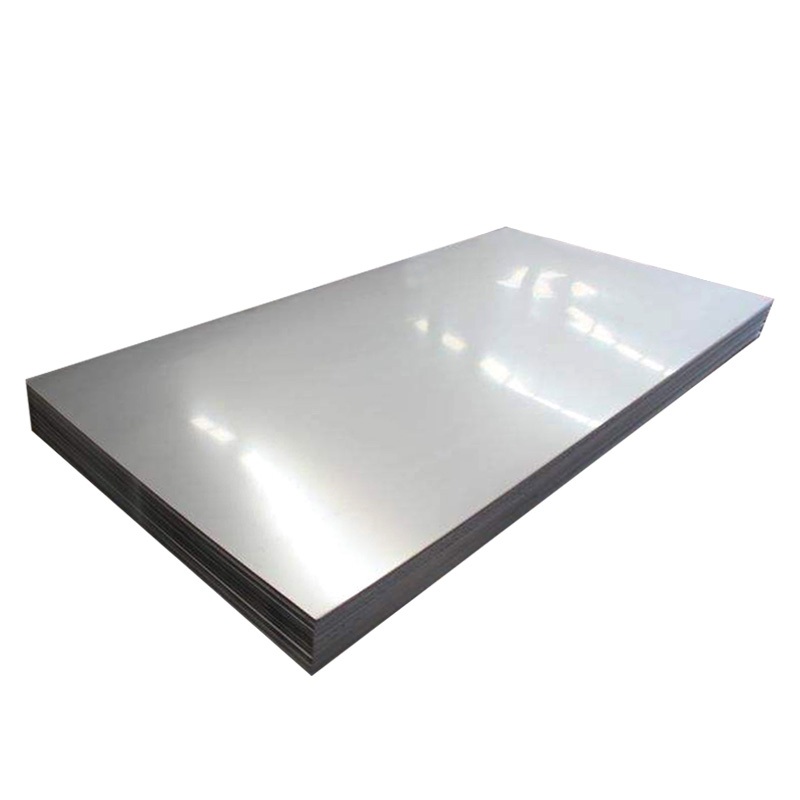
Module 1 — Product Description
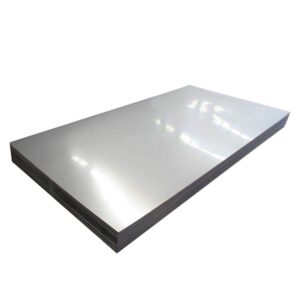
Haynes 188 is a cobalt-nickel-chromium-tungsten superalloy supplied by Shanghai Qinxin Metal in sheet and plate form for the most demanding high-temperature structural applications. It combines outstanding oxidation resistance, excellent sulfidation resistance, and high strength at temperatures up to approximately 1100°C (2000°F), making it one of the most capable cobalt-based sheet alloys available for hot-section aerospace and industrial gas turbine components.
The alloy’s nominal composition of 39% cobalt, 22% nickel, 22% chromium, 14% tungsten, and small additions of lanthanum, manganese, and silicon produces a stable austenitic matrix with dispersed carbides. The lanthanum addition significantly improves oxide scale adhesion, which is the principal reason Haynes 188 outperforms many nickel-based alloys in cyclic oxidation and sulfidizing atmospheres. The tungsten content provides solid-solution strengthening and contributes to exceptional high-temperature creep resistance.
Haynes 188 sheet and plate are commonly specified for:
- Combustion liners, transition ducts, and afterburner components in jet engines
- Flame holders, exhaust manifolds, and hot gas ducting in industrial gas turbines
- Rocket engine nozzle skirts and thrust chamber liners
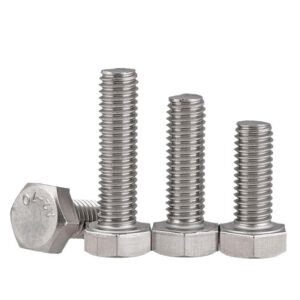
- High-temperature fasteners, brackets, and clips in aerospace structures
- Heat treating fixtures, radiant tubes, and furnace muffles
- Chemical process equipment exposed to hot sulfidizing environments
Compared with nickel-based alloys such as Inconel 625, Haynes 188 retains higher tensile and stress-rupture strength in the 900–1100°C range, with a typical 1000-hour rupture stress around 20 MPa at 1100°C. Compared with Haynes 230, the principal trade-off is fabricability: Haynes 188 has higher strength at temperature, but is more difficult to cold form and is typically formed in the solution-annealed condition with intermediate anneals for severe draws.
Shanghai Qinxin Metal supplies Haynes 188 sheet and plate from mill-direct inventory, manufactured to AMS 5608 (sheet, strip, and plate) and AMS 5772 (plate, solution annealed) chemistry and mechanical requirements. The UNS designation is R30188. Available thicknesses range from 0.5 mm cold-rolled sheet up to 50 mm plate, with standard widths of 1000 mm and 1219 mm, and lengths of 2000 mm, 2438 mm, and 3000 mm. Mill test certificates to EN 10204 3.1 are supplied with every shipment. Cut-to-size blanks, waterjet-cut profiles, and rough-machined blanks are available on request. Contact us with your drawing or specification for project pricing and current lead time.
Module 3 — Specification Table
Product: Haynes 188 Sheet & Plate (UNS R30188)
| Parameter | Specification |
|---|---|
| Alloy Type | Cobalt-Nickel-Chromium-Tungsten superalloy (γ matrix, carbide-strengthened) |
| UNS Designation | R30188 |
| Common Trade Name | Haynes 188 (Haynes International) |
| Product Form | Cold-rolled sheet, hot-rolled plate |
| Thickness Range | 0.5 mm – 6.0 mm (sheet); 6.0 mm – 50.0 mm (plate) |
| Standard Widths | 1000 mm, 1219 mm (custom widths on request) |
| Standard Lengths | 2000 mm, 2438 mm (8 ft), 3000 mm |
| Standards | AMS 5608, AMS 5772, ASTM B815 (rod/bar ref.) |
| Condition (Standard Supply) | Solution annealed (per AMS 5608 / 5772) |
| Surface Finish | Mill finish (2B for sheet, No.1 / hot-rolled & pickled for plate) |
| Density | 8.97 g/cm³ |
| Melting Range | Approximately 1300 – 1330 °C |
Nominal Chemical Composition (% by weight):
| Element | Content |
|---|---|
| Cobalt (Co) | Balance (~39) |
| Nickel (Ni) | 22.0 |
| Chromium (Cr) | 22.0 |
| Tungsten (W) | 14.0 |
| Lanthanum (La) | 0.03 |
| Manganese (Mn) | 1.25 max |
| Silicon (Si) | 0.40 max |
| Iron (Fe) | 3.0 max |
| Carbon (C) | 0.05 – 0.15 |
| Boron (B) | 0.015 max |
| Sulfur (S) | 0.015 max |
| Phosphorus (P) | 0.020 max |
Typical Mechanical Properties (Solution Annealed Sheet):
| Property | Room Temperature | 540 °C | 870 °C | 1100 °C |
|---|---|---|---|---|
| Tensile Strength | 960 MPa | 800 MPa | 550 MPa | 280 MPa |
| Yield Strength (0.2%) | 480 MPa | 400 MPa | 280 MPa | 150 MPa |
| Elongation (in 50 mm) | 45% | 50% | 55% | 40% |
| Stress to Rupture (1000 h) | — | — | 65 MPa | 20 MPa |
Values are typical for solution-annealed sheet; actual values per AMS 5608 / 5772 test report.
Physical & Environmental Performance:
| Property | Value / Description |
|---|---|
| Max Continuous Service Temperature (air) | 1100 °C |
| Oxidation Resistance | Excellent; lanthanum-stabilized oxide scale, low spallation under cyclic conditions |
| Sulfidation Resistance | Excellent; among the best in the Haynes family |
| Carburization Resistance | Good |
| Thermal Expansion (20–1000 °C) | 14.5 × 10⁻⁶ /K |
| Thermal Conductivity (RT) | 14 W/m·K |
| Magnetic Response | Essentially non-magnetic (austenitic matrix) |
| Weldability | Good with matching filler (Haynes 188 filler, AMS 5777); use low heat input to minimize HAZ cracking |
Available Standards & Forms at Qinxin Metal:
| Standard | Form | Notes |
|---|---|---|
| AMS 5608 | Sheet, strip, plate (solution annealed) | Default aerospace standard |
| AMS 5772 | Plate (solution annealed) | Heavier-gauge plate |
| ASTM B815 | Rod, bar reference (chemistry) | For traceability of similar chemistry |
| Customer-specific spec | Sheet / plate | MTC per EN 10204 3.1 included |
Packaging & Documentation:
| Item | Detail |
|---|---|
| Sheet Protection | Interleaved PE film, edge guards, wooden crate |
| Plate Protection | VCI paper, plywood case, edge protectors |
| Marking | Alloy / UNS / standard / heat number / size / finish per piece |
| Documentation | EN 10204 3.1 mill test certificate, dimensional report, surface finish report on request |
Recommended Internal Links (Related Products):
- Haynes 230 Sheet & Plate (UNS N06230) — for applications where fabricability matters more than peak high-T strength
- Inconel 625 Sheet & Plate (UNS N06625) — for chemical/sea-water environments
- Inconel 718 Sheet & Plate (UNS N07718) — for 700 °C structural components
- L605 / Haynes 25 Sheet (UNS R30605) — for spring and high-temperature fabrications
- Haynes 188 Round Bar & Welding Filler
FAQ Hints:
- What is the difference between Haynes 188 and Haynes 230? — 188 is cobalt-based with superior sulfidation resistance and higher strength above 1000 °C; 230 is nickel-based with better fabricability and longer life in cyclic oxidation.
- What is the maximum service temperature for Haynes 188 sheet? — Up to 1100 °C in oxidizing atmospheres; performance in sulfidizing atmospheres is among the best in the Haynes family.
- Does Haynes 188 require solution annealing before use? — Sheet and plate are supplied in the solution-annealed condition per AMS 5608 / 5772 and can be formed in this state.
- Can Haynes 188 be welded? — Yes, with matching Haynes 188 filler (AMS 5777) using low heat input to minimize HAZ hot cracking.
- Is a mill test certificate provided? — Yes. EN 10204 3.1 MTC with full chemistry and mechanical test data ships with every order.