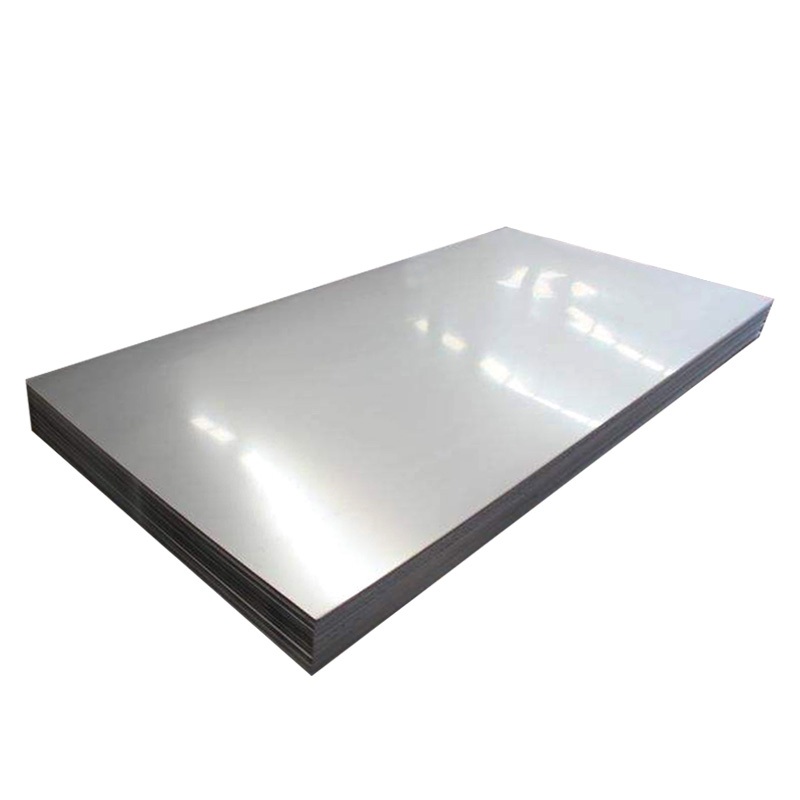
Product Description (Body Copy)
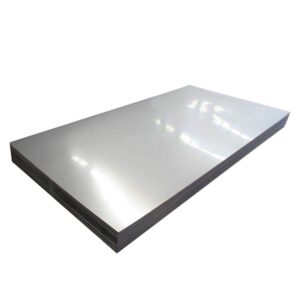
Haynes 230 is a nickel-chromium-tungsten-molybdenum superalloy supplied by Shanghai Qinxin Metal in sheet and plate form for high-temperature structural service up to 1149°C (2100°F). It is one of the most widely specified high-temperature sheet alloys for gas turbine combustion components and is recognized for a unique combination of excellent oxidation resistance, good long-term strength, and outstanding fabricability — making it a versatile choice for both new builds and replacement parts.
The alloy’s nominal composition of 57% nickel, 22% chromium, 14% tungsten, 2% molybdenum, and small additions of aluminum, titanium, and lanthanum produces a stable austenitic matrix strengthened by solid-solution tungsten and molybdenum. The lanthanum micro-addition pins the protective chromium oxide scale to the surface, dramatically reducing spallation under thermal cycling — the principal reason Haynes 230 outperforms most nickel-based alloys in cyclic oxidation tests and shows essentially no degradation after thousands of hours at 1100°C.
Haynes 230 sheet and plate are commonly specified for:
- Combustion cans, flame holders, and transition ducts in jet engines
- Combustion liner and hot-gas-path components in industrial gas turbines
- Exhaust manifolds, afterburner parts, and thrust reversers
- High-temperature heat shields, ducts, and expansion bellows
- Heat treating fixtures, radiant tubes, and furnace muffles
- Coal-fired boiler superheater components
- Ammonia and methanol reformers (high-temperature catalyst support)
- Petrochemical process equipment exposed to oxidizing + nitriding atmospheres
Compared with Haynes 188, Haynes 230 trades a small amount of high-temperature strength for substantially better cold formability, weldability, and creep ductility — which is why it is the default choice for formed combustion cans. Compared with Inconel 625, Haynes 230 retains significantly higher strength above 900°C and far better oxidation resistance at 1000–1150°C. Compared with Inconel 718, Haynes 230 is preferred for service above 760°C, where Inconel 718 begins to lose its gamma-prime strengthening.
Shanghai Qinxin Metal supplies Haynes 230 sheet and plate from mill-direct inventory manufactured to AMS 5878 (sheet, strip, and plate, solution annealed) and ASTM B572 (rod, bar, and wire — for chemistry reference). The UNS designation is N06230. Available thicknesses range from 0.4 mm cold-rolled sheet up to 50 mm plate, with standard widths of 1000 mm and 1219 mm, and lengths of 2000 mm, 2438 mm, and 3000 mm. All material is supplied in the solution-annealed condition (1240–1260°C / water quench or rapid cool) and is fully recrystallized for optimum formability. Mill test certificates to EN 10204 3.1 are included with every shipment. Cut-to-size blanks, waterjet-cut profiles, and deep-draw trial runs are available on request. Contact us with your specification for current pricing and lead time.
3. Specification Tables
3.1 General
| Parameter | Specification |
|---|---|
| Alloy Type | Nickel-Chromium-Tungsten-Molybdenum superalloy (γ matrix, carbide + nitride strengthened) |
| UNS Designation | N06230 |
| Common Trade Name | Haynes 230 (Haynes International) |
| Product Form | Cold-rolled sheet, hot-rolled plate |
| Thickness Range | 0.4 mm – 6.0 mm (sheet) / 6.0 mm – 50.0 mm (plate) |
| Standard Widths | 1000 mm, 1219 mm (custom widths on request) |
| Standard Lengths | 2000 mm, 2438 mm (8 ft), 3000 mm |
| Standards | AMS 5878, ASTM B572 (rod/bar ref.) |
| Standard Supply Condition | Solution annealed (1240–1260 °C, water quench or rapid cool) |
| Surface Finish | Mill finish (2B for sheet / No.1 hot-rolled & pickled for plate) |
| Density | 8.97 g/cm³ |
| Melting Range | ~1300 – 1370 °C |
3.2 Nominal Chemical Composition (% by weight)
| Element | Content |
|---|---|
| Nickel (Ni) | Balance (~57) |
| Chromium (Cr) | 22.0 |
| Tungsten (W) | 14.0 |
| Molybdenum (Mo) | 2.0 |
| Cobalt (Co) | 5.0 max (typically < 0.5) |
| Manganese (Mn) | 0.5 – 1.0 |
| Silicon (Si) | 0.25 – 0.75 |
| Aluminum (Al) | 0.20 – 0.50 |
| Titanium (Ti) | 0.05 – 0.20 |
| Lanthanum (La) | 0.005 – 0.05 |
| Iron (Fe) | 3.0 max |
| Carbon (C) | 0.05 – 0.15 |
| Boron (B) | 0.015 max |
| Sulfur (S) | 0.015 max |
| Phosphorus (P) | 0.030 max |
3.3 Typical Mechanical Properties (Solution Annealed Sheet)
| Property | RT | 540°C | 870°C | 1100°C | 1150°C |
|---|---|---|---|---|---|
| Tensile Strength (MPa) | 870 | 720 | 510 | 260 | 220 |
| Yield Strength 0.2% (MPa) | 380 | 320 | 240 | 130 | 110 |
| Elongation (in 50 mm) | 48% | 50% | 60% | 70% | 75% |
| Stress to Rupture, 1000 h (MPa) | — | — | 60 | 18 | 14 |
Values are typical for solution-annealed sheet per AMS 5878; actual values per MTC.
3.4 Physical & Environmental Performance
| Property | Value / Description |
|---|---|
| Max Continuous Service (air) | 1149 °C |
| Oxidation Resistance | Outstanding — La-pinned Cr₂O₃ scale, minimal spallation, slow mass loss under cycling |
| Nitridation Resistance | Good |
| Sulfidation Resistance | Good (lower than Haynes 188 in pure H₂S) |
| Carburization Resistance | Good |
| Thermal Expansion (20–1000 °C) | 14.5 × 10⁻⁶ /K |
| Thermal Conductivity (RT) | 14 W/m·K |
| Magnetic Response | Non-magnetic (austenitic) |
| Weldability | Excellent — matching filler Haynes 230-W (AMS 5839); tolerant of standard GTAW / GMAW; low HAZ cracking risk |
| Cold Formability | Very good in solution-annealed condition; deep-draw capable |
| Hot Formability | Excellent at 1150 – 1230 °C |
3.5 Available Standards & Forms
| Standard | Form | Notes |
|---|---|---|
| AMS 5878 | Sheet, strip, plate (solution annealed) | Default aerospace standard |
| AMS 5839 | Welding wire | Matching filler metal |
| ASTM B572 | Rod, bar, wire | Chemistry reference only |
| Customer-specific spec | Sheet / plate | MTC per EN 10204 3.1 included |
3.6 Packaging & Documentation
| Item | Detail |
|---|---|
| Sheet Protection | Interleaved PE film, edge guards, wooden crate |
| Plate Protection | VCI paper, plywood case, edge protectors |
| Marking | Alloy / UNS / standard / heat number / size / finish per piece |
| Documentation | EN 10204 3.1 mill test certificate, dimensional report, surface finish report on request |
4. Comparison: Haynes 230 vs Haynes 188
| Dimension | Haynes 230 (Ni-base) | Haynes 188 (Co-base) |
|---|---|---|
| UNS | N06230 | R30188 |
| Base | ~57% Ni | ~39% Co |
| Max Service Temperature | 1149 °C | 1100 °C |
| 1100°C Tensile Strength | 260 MPa | 280 MPa |
| 1100°C 1000h Rupture | 18 MPa | 20 MPa |
| Cold Formability | Excellent (deep-draw) | Limited (needs intermediate anneal) |
| Weldability | Excellent (low HAZ risk) | Good (low heat input required) |
| Cyclic Oxidation | Best in Haynes family | Good |
| Sulfidation Resistance | Good | Excellent |
| Typical Application | Combustion cans (formed) | Thrust chambers, petrochemical |
Selection rule of thumb: If the part is deep-drawn or heavily formed → Haynes 230. If it is a high-stress hot part in a sulfidizing atmosphere → Haynes 188.
5. Internal Links (Cross-Sell Cluster)
Primary (sibling products):
- Haynes 188 Sheet & Plate (UNS R30188) — for >1000 °C, high-strength, high-sulfidation applications
- Haynes 230 Round Bar & Welding Filler (UNS N06230, AMS 5839)
- L605 / Haynes 25 Sheet (UNS R30605) — for springs, high-temp fabrications, biomedical
Cross-sell (adjacent alloys):
- Inconel 625 Sheet & Plate (UNS N06625) — chemical / marine use below 900 °C
- Inconel 718 Sheet & Plate (UNS N07718) — 700 °C structural use
- Inconel 601 Sheet & Plate (UNS N06601) — furnace applications to 1200 °C
Recommended pillar page: Haynes 188 vs Haynes 230: Choosing the Right High-Temperature Sheet Alloy for Combustion Components
6. Frequently Asked Questions
1. What is the maximum service temperature for Haynes 230 sheet? Up to 1149 °C (2100 °F) in continuous oxidizing service. Below ~1100 °C it has essentially the lowest mass loss in cyclic oxidation of any Haynes family alloy.
2. How does Haynes 230 compare with Haynes 188? 230 has better cold formability and weldability, and is the default choice for formed combustion cans. 188 has higher strength above 1000 °C and better sulfidation resistance for severe petrochemical environments.
3. Can Haynes 230 be welded? Yes, with matching Haynes 230-W filler (AMS 5839) using standard gas-tungsten-arc or gas-metal-arc practice. HAZ hot-cracking risk is low.
4. What condition is Haynes 230 supplied in? Solution annealed at 1240–1260 °C followed by water quench or rapid cool. The alloy is fully recrystallized and ready for cold forming.
5. Is a mill test certificate provided? Yes. EN 10204 3.1 MTC with full chemistry and mechanical test data ships with every order.
6. What thicknesses and sizes are available? 0.4 mm cold-rolled sheet up to 50 mm plate, in standard 1000 mm and 1219 mm widths. Custom cut-to-size blanks and waterjet profiles are available on request.
7. Call to Action
- Request a Quote with drawing or specification
- Free Material Sample swatches available on request
- EN 10204 3.1 Mill Test Certificate included with every shipment
- Custom Sizes: cut-to-length, waterjet profiles, deep-draw trial runs
- Contact: Shanghai Qinxin Metal · qinxinmetal.com